Do I have rising damp?
Probably not. Most damp we are called to is penetrating damp from an external defect or condensation, both of which a damp proof course will not fix. Check the gutters and the ground levels first. See damp proofing.
Practical guidance from a local building team on looking after a property in East Sussex, and what things actually cost.
Gas Safe registered, FMB members and family-run in Eastbourne.
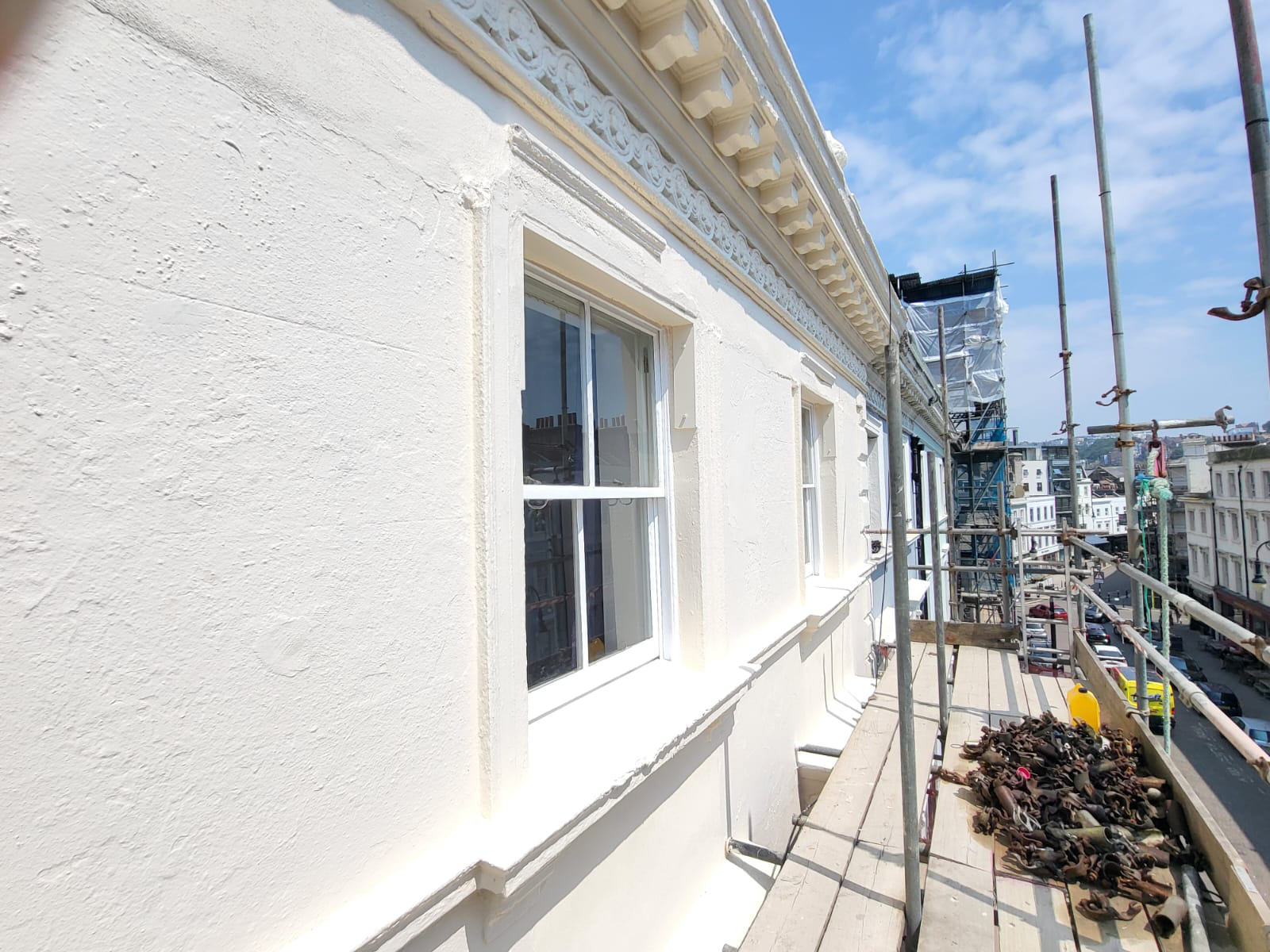
We have spent years looking after property across East Sussex, so we know the problems that come up again and again here: gutters that overflow every winter, render that has been painted when it should have been repaired, wall ties corroding in coastal cavities, and damp that gets blamed on rising damp when the cause is a blocked downpipe.
These articles are the answers we find ourselves giving on the phone most often. They are written to help you work out what you are dealing with and what it is likely to involve, including when the honest answer is that you do not need a builder at all.
If you have a question that is not covered, ring us on 01323 671001. We are happy to give an opinion over the phone, and we would rather tell you it is a small job than have you worry about it.

Five small faults that turn into expensive ones if they are left, and how to spot them early on a property in…
read more
What to ask, what to check and what the warning signs are when you are choosing a builder or maintenance firm in…
read more
Why two quotes for the same job can differ so much, what actually drives the cost of building work, and where it…
read moreIf you are looking for a quick answer rather than an article, these are the ones that come up most often, and each service page has a fuller set of questions on it.
Probably not. Most damp we are called to is penetrating damp from an external defect or condensation, both of which a damp proof course will not fix. Check the gutters and the ground levels first. See damp proofing.
Most roofs we look at need a repair to one failed detail rather than a full recover. Get a second opinion before committing to a new roof, and ask for photographs of what was found. See roof repairs.
Either they are blocked, the fall is wrong, the run has sagged, or there are too few outlets for the roof area. It is worth fixing because a wet wall causes most of the expensive damage we see. See gutter cleaning and repairs.
If it is solid walled and pre 1920 it should be lime. Cement mortar is harder than the old brick and pushes moisture out through the brick faces, which then spall. See brickwork and repointing.
Usually not. Photograph it with a date and a ruler so change can be measured. Horizontal cracking that repeats up the wall is more likely corroded wall ties than subsidence. See structural works and cavity wall tie replacement.
Measure from the ceiling joists to the ridge. Around 2.2 metres or more and it is usually possible. The staircase position stops more conversions than head height does. See loft conversions.
Residential Customer
The team at CB Property Maintenance were extremely professional and easy to work with. They helped us make good, informed decisions during our renovation.
Most of the expensive work we are called out to could have been prevented by an hour of attention at the right time of year. This is roughly the cycle we suggest for property in East Sussex.
If you would rather not go up a ladder, we can do the annual check as part of a regular maintenance visit and report back with photographs.
Yes, within reason. Ring us on 01323 671001 and describe what is happening, or send a photo and a postcode by email. We will tell you what it sounds like and if it is worth someone coming out. We would rather tell you it is minor than sell you something you do not need.
For most houses, once a year is enough, ideally in late autumn: gutters cleared, roof looked at, external timber and decoration checked, and anything flagged before winter. Flats, blocks and commercial buildings usually need more frequent attention because a failure affects several occupiers.
Anything to do with keeping water out and dealing with salt. Gutters and rainwater goods, roof fixings and ridge bedding, render and pointing, and external decoration all have a harder life here than inland. Exposed south and west elevations always need attention first.
Plenty of it, if you can do it safely from the ground. Watching where water goes during heavy rain, checking ground levels against the damp course, keeping trickle vents open and running extractor fans all help. We would rather you did not go up on a roof or work at height, because that is where people get hurt.
They come from the questions we are actually asked and the jobs we are actually called to in East Sussex, which is why they mention local building types and coastal conditions rather than generic advice.
Yes, and we would welcome it. If there is something about looking after a property here that you would find useful, ring us or send us a message through the contact page and we will write about it.
We are Gas Safe registered and members of the Federation of Master Builders, NAPIT and the FSB. Those memberships mean our gas, electrical and building work is measured against recognised standards, and that an outside body has looked at how we work rather than us simply saying we are good at it. For a family business our reputation matters more than anything, and we have built it one customer at a time.
Our Accreditations