Tile and slate repairs
Slipped, cracked and missing units replaced and refixed, matching the existing where we can. On exposed roofs we also refix surrounding tiles that are working loose rather than coming back for them next winter.
Slipped tiles, leaks, flashings, flat roofs and chimneys repaired by a local family firm that will tell you when a repair beats a replacement.
Gas Safe registered, FMB members and family-run in Eastbourne.
Roof repairs cover anything that stops water getting into the building through the roof: replacing slipped, cracked and missing tiles or slates, renewing lead and flashing at abutments and chimneys, repairing ridge and hip tiles and their bedding, patching and recovering flat roofs, sorting valleys and verges, and dealing with the chimney stacks and rendering that sit above the roof line.
Most roof leaks are not the roof covering failing wholesale. They are one detail that has gone: a lifted flashing, a cracked mortar fillet, a slipped slate, a blocked valley or a failed flat roof joint. Finding which one is most of the work, and it is why we look in the loft as well as on the roof.
We work on pitched and flat roofs on houses, flats and commercial buildings across East Sussex. We do not use pressure to sell full roof replacements, and where a repair will hold for years we will say so and price the repair.
Where a leak has already stained ceilings or wet the roof timbers, we can put that right too rather than leaving you to arrange a plasterer and a carpenter afterwards.
A stain on a bedroom ceiling is rarely below the hole. Water runs along rafters, across ceiling joists and down a wall before it drops, so the mark inside can be metres away from where it got in.
Other signs come earlier. Tiles visibly out of line, debris in the gutters after wind, damp patches on a chimney breast, sunlight visible in the loft, or a musty smell in the roof void all point at something that needs looking at before it stains a ceiling.
Along this coast wind is usually the culprit. Gales lift and shift tiles, strip mortar out of ridges and verges, and tear at flat roof edges. After a bad winter storm it is worth a look from the ground with binoculars.
Do not go up on a wet roof to look. More people are hurt checking a roof than by the leak itself, and it is what we have scaffold and towers for.
Our roofers inspect the roof and the loft. Working from inside as well as outside is the fastest way to find where water is actually entering, because staining, daylight and wet timber in the roof void point back to the source.
Then we tell you what we found and what it needs, with photographs if you cannot get up there yourself. If the covering has years left and one detail has failed, we repair the detail. If a roof is at the end of its life and repairs would be money after money, we will tell you that instead.
We work off scaffold or towers where the job needs it rather than stretching off a ladder, and we leave the gutters clear and the ground tidy.
Access is itemised separately in the quote, so you can see what the scaffold costs and decide whether to do other high level work while it is up.
Pitched and flat, tile and slate, domestic and commercial, covering single slipped tiles and full flat roof recovers.
Slipped, cracked and missing units replaced and refixed, matching the existing where we can. On exposed roofs we also refix surrounding tiles that are working loose rather than coming back for them next winter.
Finding the actual point of entry from inside and out before anything is opened up, because the stain on the ceiling is usually nowhere near the fault. Photographs provided so you can see what we found.
Lead and flashing renewal at chimneys, parapets, dormers and roof to wall junctions, which is where a large share of pitched roof leaks actually originate.
Rebedding and repointing mortar work, and dry fixed systems that clamp tiles mechanically where wind keeps stripping the mortar out. Worth considering on any exposed coastal roof.
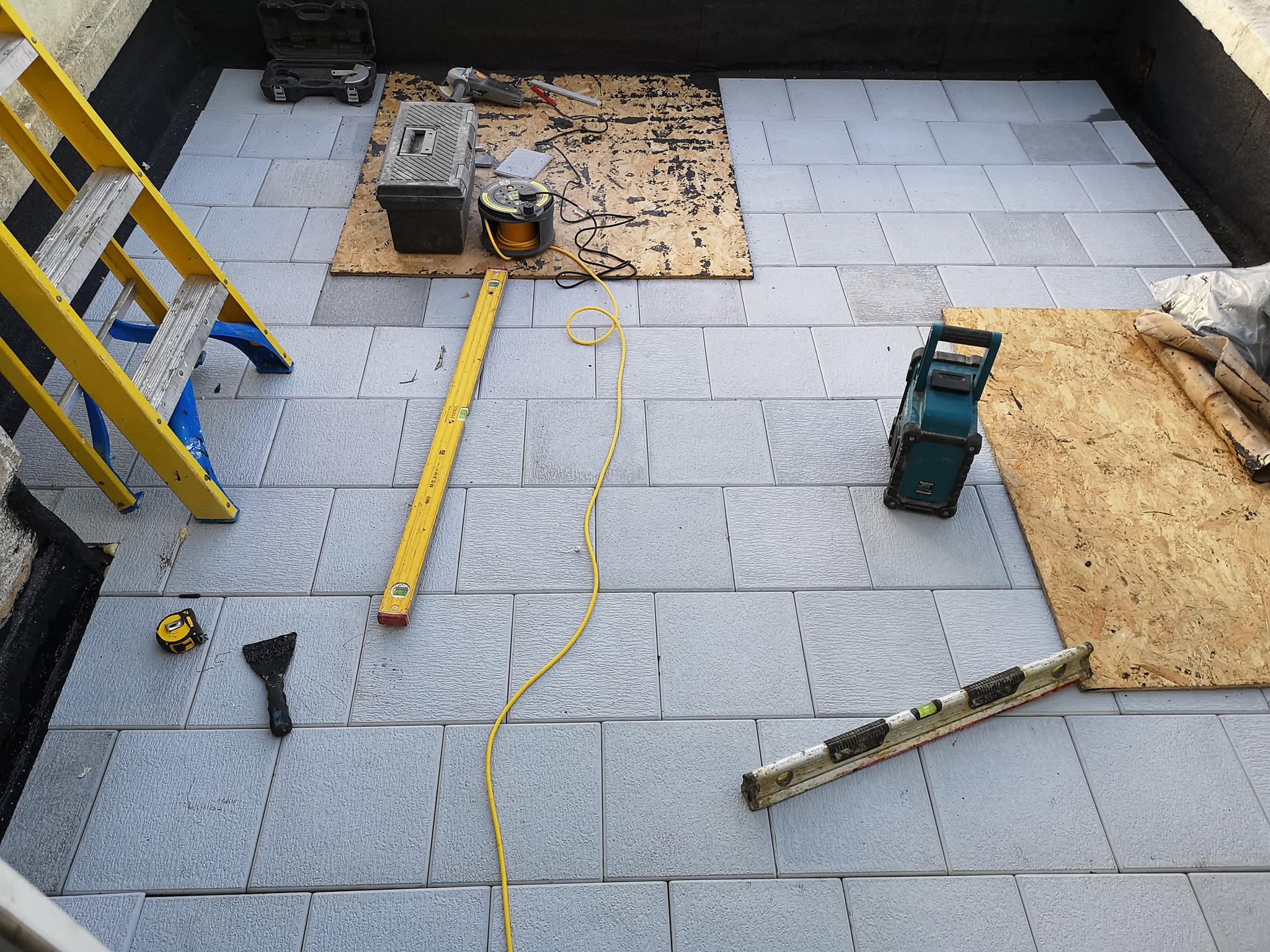
Repairs and recovering in felt, EPDM rubber and GRP, including outlets, upstands and trims, which is where nearly every flat roof leak we attend begins rather than in the middle.
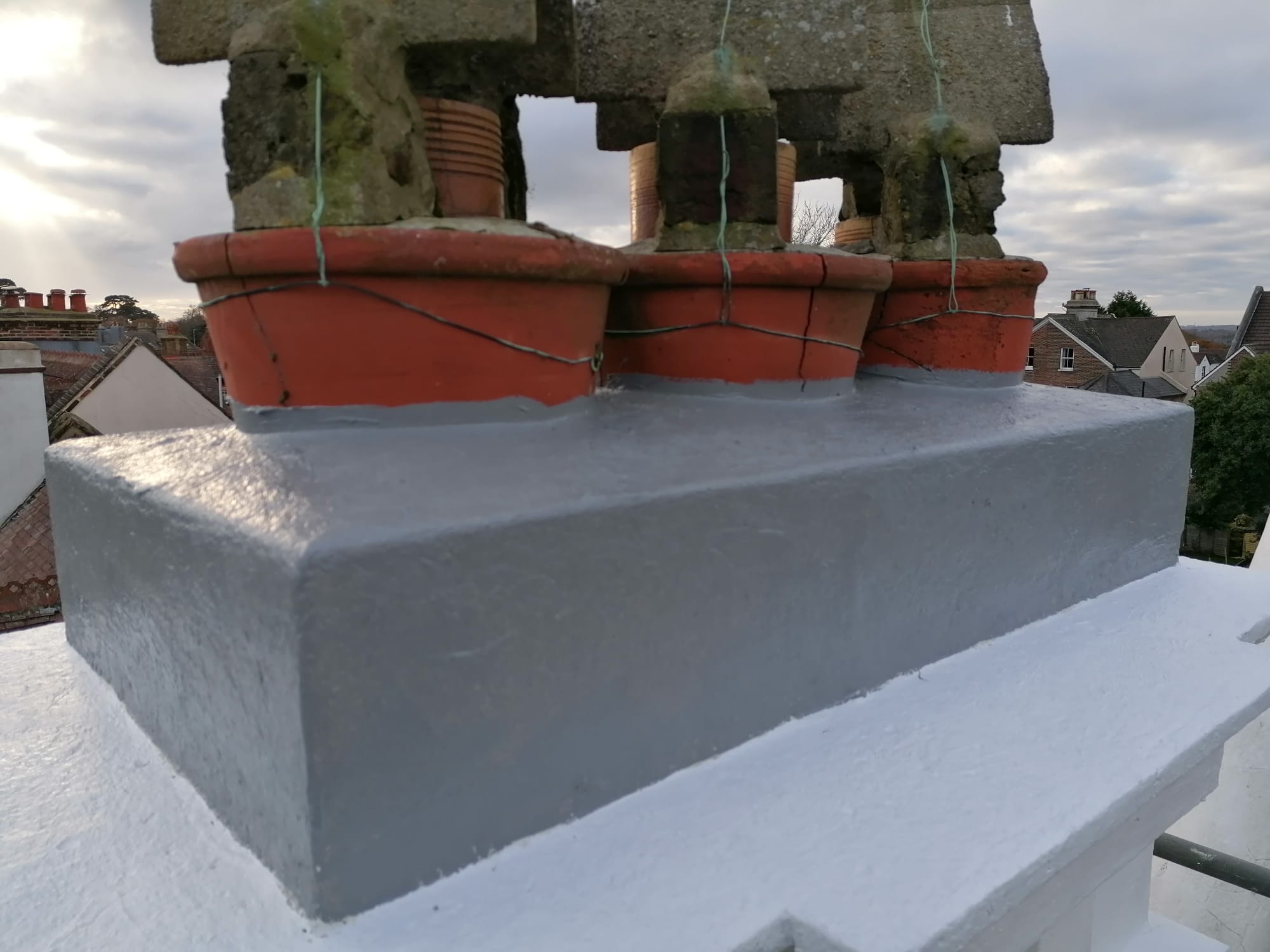
Repointing, rendering, flaunching, cowls and flashings alongside our rendering work, plus repairing rafters, battens and sarking with our carpenters where water has already caused damage.
Every roofer who knocks on your door will tell you the roof needs replacing. Here is how we actually judge it.
Most of the roofs we look at need a repair, and we will show you photographs of what we found either way so the decision is yours rather than ours.
Estate Agents
As a property company, I have used CB now for a good few years. The service is great, the builders are very knowledgeable and they tidy up after themselves.
Roofs in Eastbourne, Bexhill, Hastings, Seaford and Newhaven work harder than most. Gusts coming off the Channel get under tile edges and lift them, driving rain is pushed uphill under laps, and salt corrodes nails and fixings so tiles that were sound start slipping one by one.
Mortar suffers too. Ridge and verge bedding that would last decades inland gets stripped out by wind and rain here, which is why we often suggest dry fixed ridge and verge systems on exposed roofs. They are mechanically fixed rather than relying on mortar, and they stay put through a gale.
Flat roofs on extensions and outbuildings are the other coastal weak point, because wind gets under a lifted edge trim and peels a covering back very quickly. Checking the perimeter trims and the outlets once a year takes ten minutes and prevents most flat roof failures.
After a named storm we get a lot of calls, and we prioritise the ones where water is actively coming in. If tiles have come off and rain is forecast, ring us on 01323 671001 and say so rather than emailing, and do not go up on a wet roof to look.
Most of the roofs we look at need a repair, not a replacement. If the tiles or slates are sound and one detail has failed, repairing that detail is the sensible answer and will last for years. A full recover is worth considering when the covering itself is failing across the roof, when battens and felt have perished, when nails are fatiguing so tiles keep slipping, or when you are repairing the same roof every winter.
Yes, very often. Water entering at a chimney flashing runs down the outside of the stack, along a rafter and across a ceiling joist before it finds a gap and drops through. That is why we look in the loft as well as on the roof rather than working back from the stain.
Ring us on 01323 671001 and tell us water is coming in. We prioritise active leaks and will do what we can to get to you the same day. If the weather makes it unsafe to work on the roof we will look at making it watertight temporarily until it can be done safely.
Yes. We repair and recover flat roofs in felt, EPDM rubber and GRP, and most of the flat roof leaks we see are at the details rather than the middle: upstands, outlets, trims and the junction with a wall. We will tell you honestly whether a patch is worthwhile or whether the covering has reached the end of its life.
It depends on the job. A single slipped tile within safe reach can often be done from a tower or a roof ladder. Anything involving working along a roof, a chimney or a verge needs safe access, and we would rather scaffold than work unsafely. Access is itemised in the quote so you can see what it costs.
Because mortar bedding does not cope well with wind and coastal weather. Once it starts cracking, water gets in, frost opens it further and the tiles work loose. Rebedding will work for a while. A dry fixed ridge system, which clamps the tiles mechanically instead of relying on mortar, is the longer answer on an exposed roof.
We do, carefully, and we will tell you when it is not worth it. Heavy moss holds water against the tiles and blocks gutters and valleys, so removing it helps. Aggressive pressure washing strips the surface off concrete tiles and shortens their life considerably, so we brush and clear by hand and deal with the gutters at the same time.
Often worth checking. Most policies cover storm damage to a roof but not gradual wear, so the distinction matters. Photograph everything before any repair, keep any tiles that came off, and we can provide a written report and itemised costing describing the damage for your insurer.
We are based on Hyde Gardens in Eastbourne, so the town and the villages around it are home ground for us. We are out working here most days and we know the housing well, including the older seafront terraces, the Victorian and Edwardian houses in Upperton and Meads, and the newer estates and blocks of flats nearer the edge of town.
From Eastbourne we cover the whole of East Sussex. Along the coast that takes in Bexhill, Hastings, Seaford, Newhaven, Brighton, where salt air and driving rain are hard on any building. Inland we work regularly in Polegate, Hailsham, Pevensey, Willingdon, Lewes, Uckfield, Heathfield, Crowborough, Battle and the smaller villages between them, where period cottages and country properties often need a gentler approach and older materials matched carefully.
Being local matters for roof repairs. We can get to you quickly to take a look, we know the buildings and the ground conditions, and we are never far away if you need us again. If your village is not on the list there is a good chance we still reach you, so give us a call on 01323 671001 and we will tell you either way.
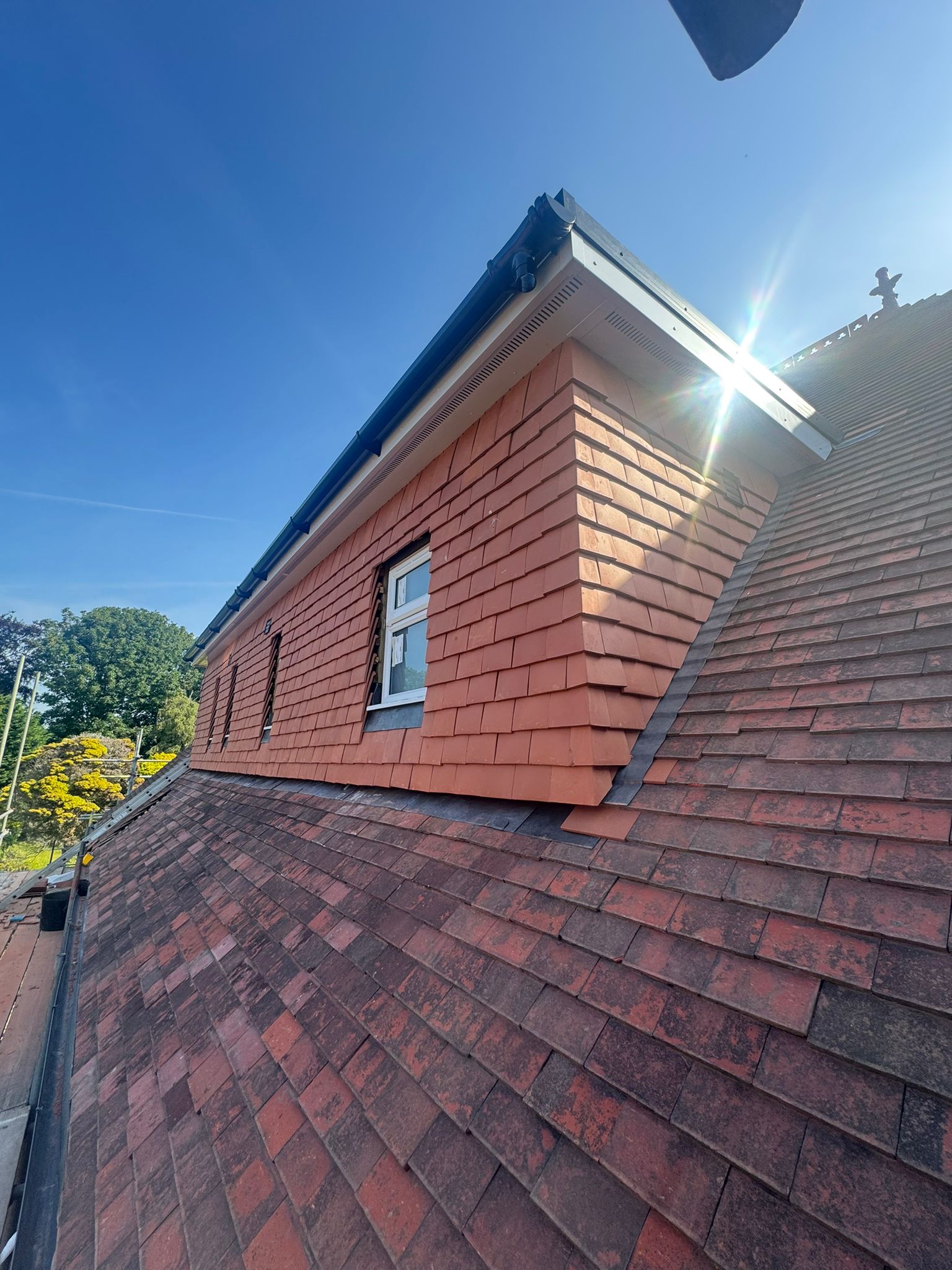
Roof repair and retiling, a new dormer, and a rendered chimney stack.
We are Gas Safe registered and members of the Federation of Master Builders, NAPIT and the FSB. Those memberships mean our gas, electrical and building work is measured against recognised standards, and that an outside body has looked at how we work rather than us simply saying we are good at it. For a family business our reputation matters more than anything, and we have built it one customer at a time.
Our Accreditations