Misted double glazing
Replacing failed sealed units while keeping the existing frames and hardware, which costs a fraction of a new window. We measure and order the unit to suit the frame rather than replacing the frame to suit a stock unit.
Draughty sashes, misted glazing, dropped doors and rotten frames repaired rather than ripped out, wherever a repair is the better answer.
Gas Safe registered, FMB members and family-run in Eastbourne.
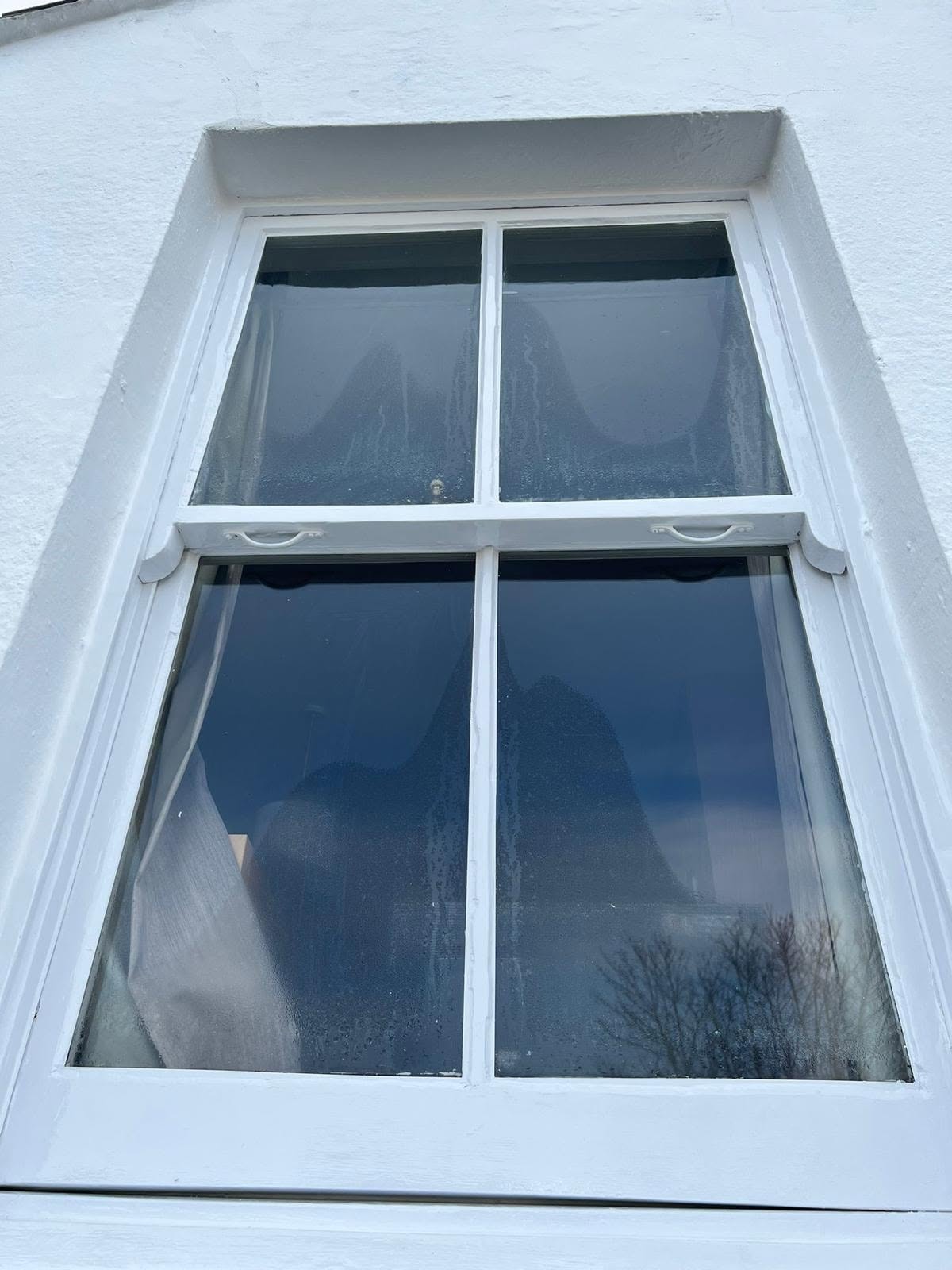
A great many of the windows and doors we are asked to replace do not need replacing. Misted double glazing usually means the sealed unit has failed, not the window, and the glass alone can be swapped. A draughty sash normally needs new cords, parting beads and brush seals. A door that will not shut is often hinges, a swollen edge or a frame that has moved.
So we repair where a repair is sound and lasting, and we say so when it is not. On a period property that is usually the better answer anyway, because original joinery is generally better timber than a modern replacement and it is what makes the building look right.
We work on timber, UPVC and aluminium windows and doors for homeowners, landlords and businesses across East Sussex, including sash windows, casements, bays, French and patio doors, front doors and commercial entrances.
We do supply and fit replacements where that really is the better answer. We are simply not trying to sell you one when a repair will do.
Misted or blown double glazing, where the seal on the unit has failed and moisture is trapped between the panes. Draughts and rattles around sashes and casements. Rotten sills and the bottom rails of doors and frames, which is where water sits.
Then the moving parts: dropped or binding doors, worn hinges, failed multipoint locks and gearboxes, snapped sash cords, seized casement stays and handles that no longer line up with the keep.
On this coast, salt and damp shorten the life of every mechanism and fixing. Locks and hinges corrode, steel lintels over openings rust and expand, and timber that stays wet at a sill end goes soft far sooner than it would inland.
Security is the other thing people ring about, usually after a break in or after an insurer has asked for a particular lock standard.
We work out what has actually failed before quoting, because the difference between a new sealed unit and a new window is considerable and it is worth being sure which one you need.
Timber repairs are spliced into sound wood, treated and primed before they go in, and painted to match. Sashes get overhauled: new cords, beads and seals, easing where they bind, so they run and close as they should.
Locks and gearboxes are matched to the existing hardware where we can so nothing else has to change, and we keep the original ironmongery on a period door wherever it is serviceable.
Where a unit really is beyond repair we will tell you, and tell you what the sensible replacement is for that building rather than the most expensive option in the brochure.
Timber, UPVC and aluminium, domestic and commercial, repair and replacement.
Replacing failed sealed units while keeping the existing frames and hardware, which costs a fraction of a new window. We measure and order the unit to suit the frame rather than replacing the frame to suit a stock unit.
New cords and weights balanced to the sash, new parting and staff beads, discreet brush seals set into the beads, and easing where paint has built up, so the window runs, closes and stops rattling.
Adjusting and rehanging, new stays, fasteners and hinges, and structural repairs to bay window frames where the timber or the support beneath has moved.
Cutting out and splicing in matching treated timber rather than replacing whole units, primed before fitting because the end grain is where the next failure starts. Through our carpenters.
Easing, rehanging and adjusting, new frames and linings, thresholds, weather bars and closers, plus fire doors fitted as complete certified assemblies where a block requires them.
Multipoint gearboxes, anti snap cylinders, handles, hinge bolts and window locks, repairs after a break in, and replacement glass including toughened and obscure where regulations require it.
Sealing up an older house sounds like a straightforward win and can cause problems if it is done without thinking about ventilation. This is how we approach it.
Done that way you get a warmer house without swapping a draught problem for a damp one. There is more on the damp side of this on our damp proofing page.
Estate Agents
As a property company, I have used CB now for a good few years. The service is great, the builders are very knowledgeable and they tidy up after themselves.
Eastbourne, Lewes, Hastings and the villages around them have a great many original sash windows, and they are worth keeping. The timber in a Victorian sash is usually slow grown and dense, far better than most modern softwood, and it is why so many of them are still in place after a century and a half.
The complaints about them are draughts, rattling and sashes that will not move, and all three are repairable. An overhaul means new cords and weights balanced to the sash, new parting and staff beads, discreet brush seals in the beads, and easing where paint has built up. Done that way a sash window runs smoothly, stops rattling and loses far less heat.
In a conservation area or on a listed building, replacement often needs consent and like for like repair usually does not, which is another good reason to repair. There are conservation areas across this part of East Sussex, including Old Town, parts of Meads, and much of Lewes and Battle, and we are happy to talk to your conservation officer about what is proposed.
If you want better thermal performance without losing the windows, slim profile double glazed units can sometimes be fitted into existing sashes, and secondary glazing is often permitted where replacement windows are not. Both are worth considering before anyone suggests taking the originals out.
Almost certainly not. Misting between the panes means the sealed unit has failed, and in most cases the glass unit alone can be replaced while keeping the existing frame and hardware. It costs a fraction of a new window. The exception is where the frame itself has also failed, and we will tell you if that is what we find.
Yes, and it is usually the better answer. Overhauling a sash means new cords and beads, brush seals fitted into the beads, and easing the sashes where paint has built up. That removes most of the draught and the rattle while keeping the original joinery, which matters on a period house and in a conservation area.
Usually one of three things: the door has swollen with damp, the hinges have worn or dropped, or the frame has moved as the building settled. On UPVC and composite doors it is often the multipoint gearbox failing so the hooks no longer engage. Each has a different fix, so it is worth having it looked at rather than forcing it.
Very often, yes. Rot is usually confined to the sill and the bottom few inches of the frame, and that can be cut out and spliced with matching treated timber, then primed and painted. If most of the frame is sound you keep the original window at a fraction of the cost. Where there is too little sound timber left we will say so.
Yes. We fit and upgrade multipoint locks, anti snap cylinders, hinge bolts, window locks and door reinforcement, and we can put right damage after a break in including frames, glazing and locks. Tell us if your insurer has asked for a particular standard and we will meet it.
Yes, where replacement is the right answer. We will tell you honestly when a repair is not worth doing, and we will talk through what suits the building, including timber on a period property where the profile matters. We are not trying to sell a replacement when a repair will do.
Sometimes. Slim profile double glazed units can be fitted into existing sashes where the rebate is deep enough and the sash is strong enough to carry the extra weight, which needs checking rather than assuming. Where that is not possible, secondary glazing gives much of the benefit and is often acceptable in a conservation area where new windows are not.
Yes. Single panes, sealed units and toughened or laminated glass can all be replaced in the existing frame. Where the glass is in a door, a low level panel or near a staircase, building regulations require safety glass, so we fit toughened or laminated as appropriate even if the original was not.
We are based on Hyde Gardens in Eastbourne, so the town and the villages around it are home ground for us. We are out working here most days and we know the housing well, including the older seafront terraces, the Victorian and Edwardian houses in Upperton and Meads, and the newer estates and blocks of flats nearer the edge of town.
From Eastbourne we cover the whole of East Sussex. Along the coast that takes in Bexhill, Hastings, Seaford, Newhaven, Brighton, where salt air and driving rain are hard on any building. Inland we work regularly in Polegate, Hailsham, Pevensey, Willingdon, Lewes, Uckfield, Heathfield, Crowborough, Battle and the smaller villages between them, where period cottages and country properties often need a gentler approach and older materials matched carefully.
Being local matters for window and door repairs. We can get to you quickly to take a look, we know the buildings and the ground conditions, and we are never far away if you need us again. If your village is not on the list there is a good chance we still reach you, so give us a call on 01323 671001 and we will tell you either way.
We are Gas Safe registered and members of the Federation of Master Builders, NAPIT and the FSB. Those memberships mean our gas, electrical and building work is measured against recognised standards, and that an outside body has looked at how we work rather than us simply saying we are good at it. For a family business our reputation matters more than anything, and we have built it one customer at a time.
Our Accreditations