Render
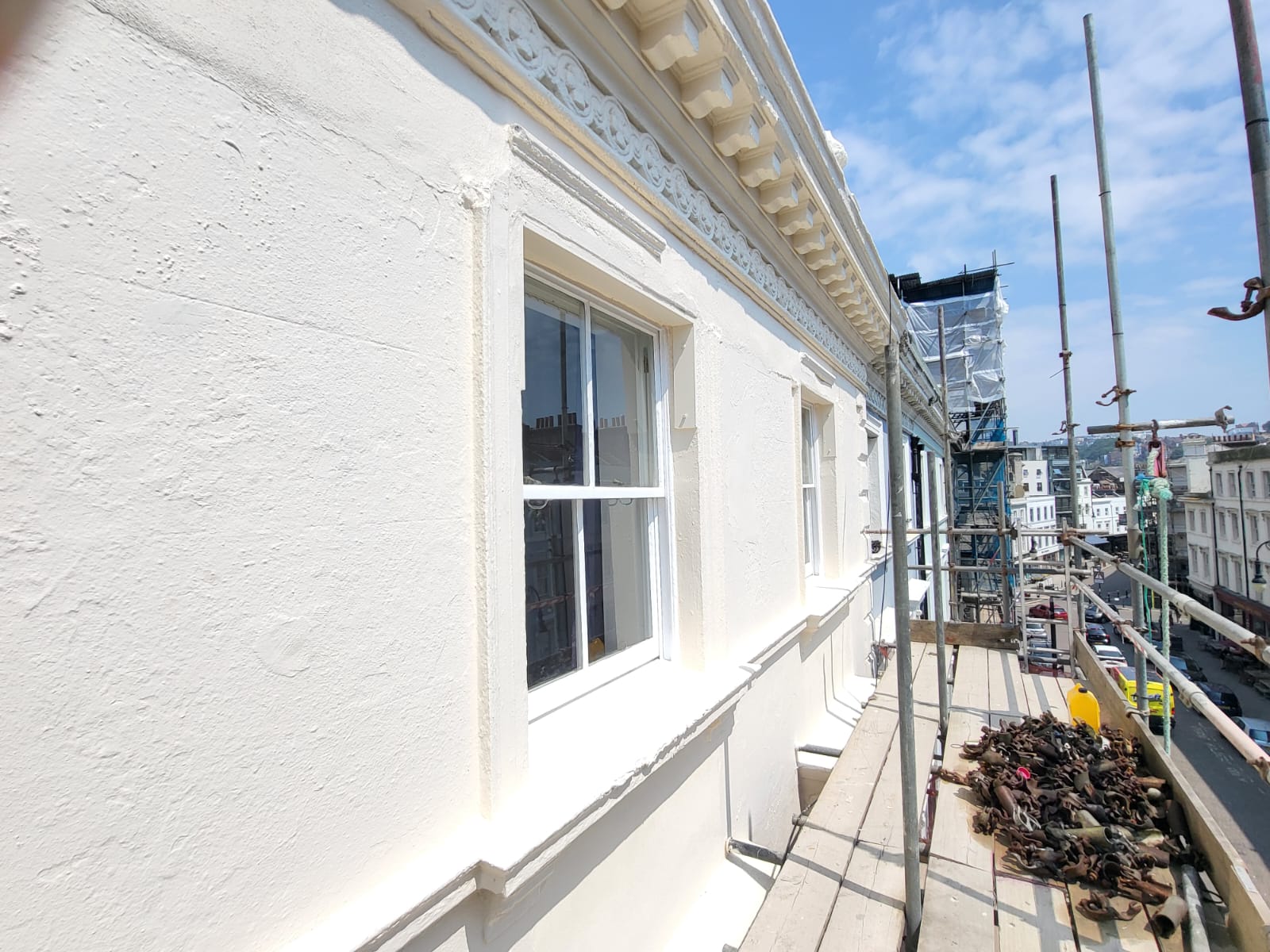
Repairs, recoating and full replacement in sand and cement, lime and through coloured systems, with beads and bell casts set so water is thrown clear of the wall. By our renderers.
Render, pointing, roofs, rainwater goods and exterior decoration put right together, so the outside of the building stops letting water in.
Gas Safe registered, FMB members and family-run in Eastbourne.

External refurbishment means dealing with the whole outside of a building as one job: render and pointing, roof and chimney, gutters, fascias and downpipes, windows and doors, cladding, and exterior decoration. The point is to make the envelope weathertight and then finish it, rather than repairing one elevation at a time for years.
Doing it together saves real money on this coast, mostly because of access. Scaffolding is a large part of the cost of any high level work, and putting it up once for the render, the roof edge, the gutters and the painting is far cheaper than four separate visits.
We refurbish the outside of houses, flats, blocks and commercial buildings across East Sussex, for owners, landlords, managing agents and businesses.
It is also the work that prevents most of the internal damage we get called to, because nearly every damp problem starts with something on the outside of the building.
Salt air, ultraviolet light and wind driven rain work on every exposed surface. Render cracks and then holds water behind it. Lime mortar washes out of joints. Paint on timber and metal fails early on south and west elevations. Fixings corrode.
Water then gets into the fabric and stays there, and that is when the expensive damage starts: damp inside, blown plaster, rotten window sills and rafter feet, and frost opening up every crack it can get into.
The mistake we see most often is decorating over the top of it. Painting cracked render or flaking timber hides the problem for a season, and the following winter it looks worse than before because water is now trapped behind fresh paint.
Exposure varies enormously street by street here. A seafront elevation and a sheltered inland one on the same house need different specifications.
We survey the whole envelope first and tell you what is actually letting water in, because that decides the order of work. There is no sense painting an elevation before the gutter above it has been fixed.
We tap render to find out how much has lost its bond, look at the roof edge and the chimney, check the pointing and the sills, and look inside at any damp patches to see where they line up outside. Then you get a written scope, elevation by elevation.
We match materials to the building: lime on solid walled period property so it can breathe, cement or silicone systems on modern construction.
Access is priced openly and separately, and we plan the sequence so the scaffold gets used for everything while it is up rather than coming back later.
The whole envelope, ground level up to the ridge, priced elevation by elevation so you can phase it if you would rather.
Repairs, recoating and full replacement in sand and cement, lime and through coloured systems, with beads and bell casts set so water is thrown clear of the wall. By our renderers.
Repointing in mortar matched to the wall rather than whatever is strongest, brick replacement and crack repair. See brickwork and repointing.
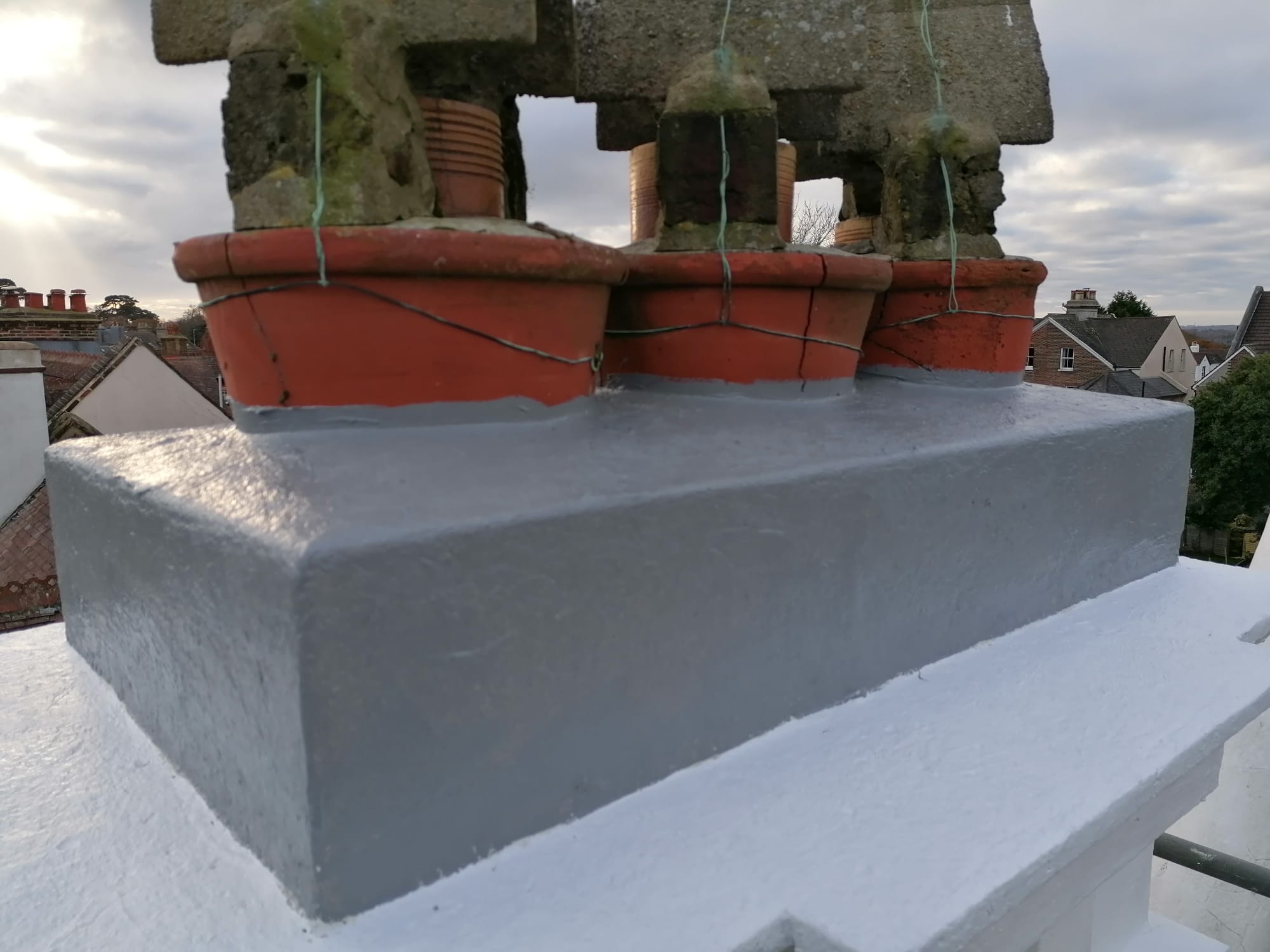
Tiles, flashings, ridges, flat roofs and chimney repairs through our roofers, plus gutters, downpipes, fascias and soffits and gulleys.
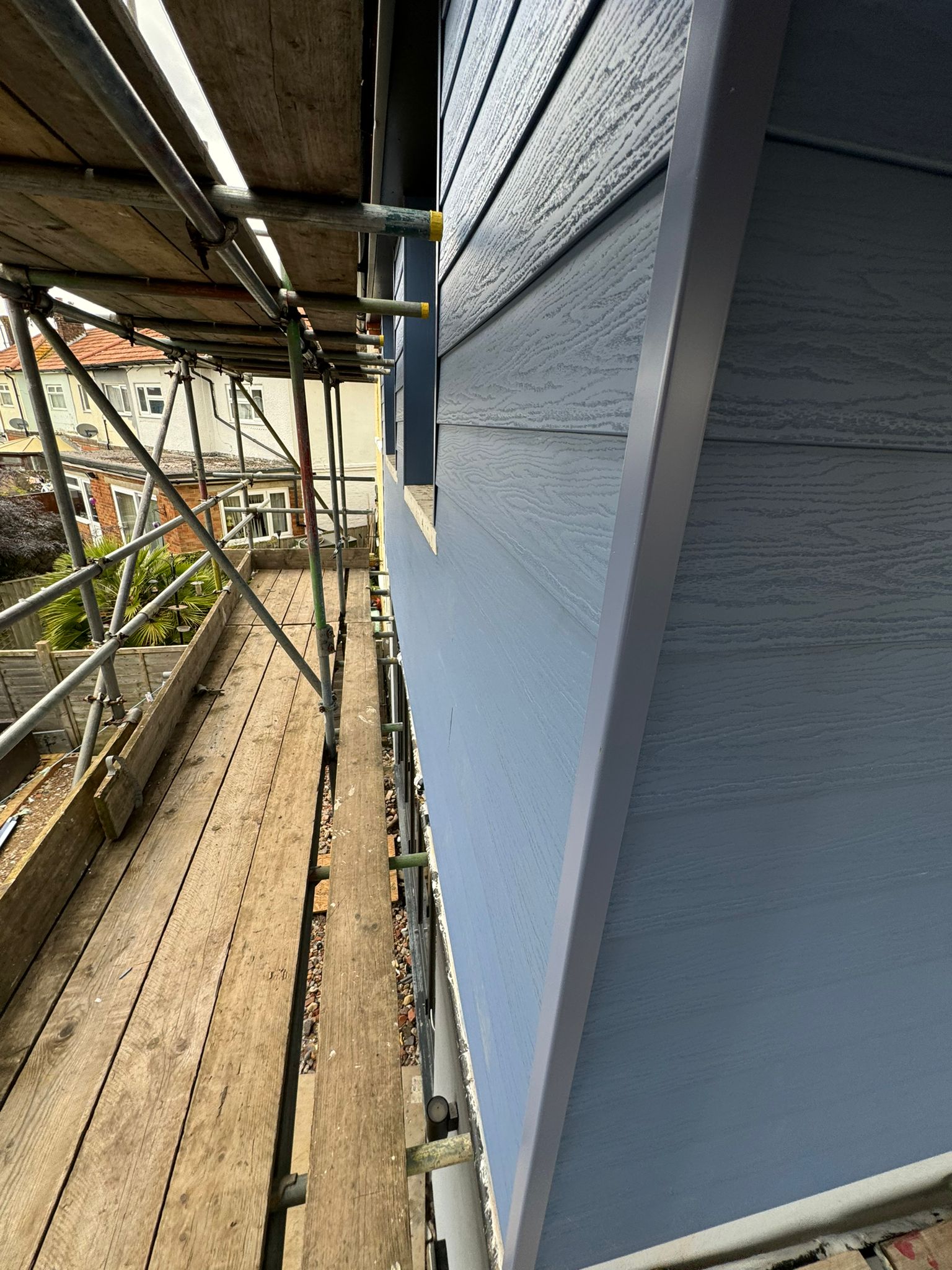
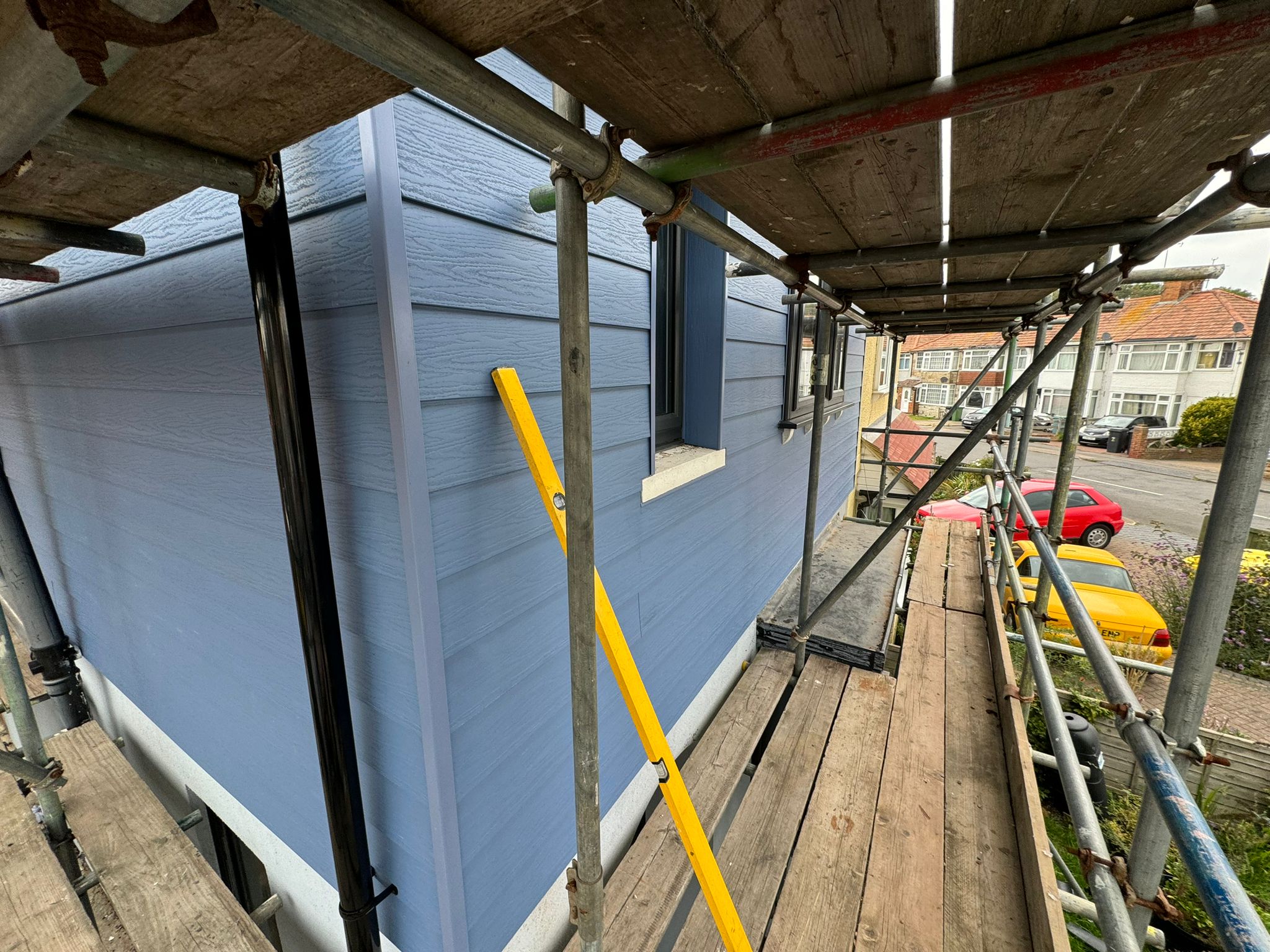
Repairing rot, sills and glazing rather than replacing whole units where the timber is sound, via window and door repairs, plus timber and UPVC cladding to gables, dormers and porches.
Masonry, render, timber and metalwork cut back to a sound edge and coated with finishes made for coastal exposure, including breathable paints on solid walls, by our decorators.
Paths, patios, walls, fences and drainage put back and set at levels that keep water away from the building, through fencing and landscaping.
External work is the clearest example of where phasing costs more rather than less, and access is the reason.
Where the budget will not stretch to everything, we will tell you which parts are keeping water out and which are cosmetic, so you can spend on the right ones first.
Residential Customer
The team at CB Property Maintenance were extremely professional and easy to work with. They helped us make good, informed decisions during our renovation.
A great deal of the housing between Eastbourne and Hastings is solid walled with no cavity, built in soft brick, flint or stone with lime mortar. Those walls take up moisture and release it again, and they need materials that let them carry on doing it.
Cement render and plastic masonry paint stop that happening. Water gets in through a crack, cannot evaporate through the hard surface, and moves inwards instead. It is the most common reason we are called to a period house with damp inside and hollow render outside at the same time. On those buildings we use lime and breathable coatings.
Exposure matters too. Seafront and clifftop property in Eastbourne, Seaford and Newhaven takes weather that inland buildings never see, so specification and preparation matter more than the brand of the finish. We would rather spend the budget on cutting back to sound material and on the right system than on an extra coat over failing work.
For blocks of flats there is a process side as well. Major external works recovered through service charges usually require formal consultation with leaseholders, so the survey, the itemised costing and the programme all need to stand up to being circulated and questioned. We are used to providing them in that form.
Usually yes, and access is the reason. Scaffolding is a significant part of the cost of any work above ground floor, so doing the render, the roof edge, the guttering and the painting while it is up costs far less than four separate visits with four lots of access. It also means the sequence is right, so nothing newly painted gets damaged by later work.
Tap it. Render that sounds hollow has lost its bond and will keep failing however often the cracks are filled, so it has to come off. Render that is sound but cracked can usually be cut out, repaired and recoated. We tap the whole elevation when we survey and tell you what proportion is actually loose.
We would not recommend it. Paint bridges the crack for a season and then water gets behind it, and because the surface is now sealed the water stays there. The following winter looks worse than before. Repairing the render first costs more up front and is the only version that lasts.
Often, because most damp is penetrating damp with an external cause: a blocked gutter, cracked render, failed pointing or a leaking roof. Sometimes the cause is condensation or a bridged damp course instead, which external work will not touch. We look at both sides of the wall before saying which it is, and there is more on our damp proofing page.
Spring to early autumn is best. Render and lime need reasonable temperatures to cure and must not be rained on or frosted while green, and exterior paint needs dry surfaces and warmth to form a decent film. We will do urgent weathertightness repairs in winter, and we will tell you honestly if a finish should wait for better conditions.
Yes. We carry out external refurbishment for managing agents, freeholders and businesses, including scaffolded work to blocks, and we are used to resident notifications, leaseholder consultation timescales and keeping access and escape routes clear throughout.
It varies with the height, the footprint and how long it is needed, and on a typical house it is a meaningful part of the total. We itemise it separately rather than burying it, so you can see the figure and decide what else is worth doing while it is standing.
Yes, and if the render is coming off anyway it is the natural moment to consider it. It needs the right detailing at reveals, sills, the roof edge and any pipework, and it changes the wall thickness. On a cold solid walled house it makes a real difference to comfort and running costs.
We are based on Hyde Gardens in Eastbourne, so the town and the villages around it are home ground for us. We are out working here most days and we know the housing well, including the older seafront terraces, the Victorian and Edwardian houses in Upperton and Meads, and the newer estates and blocks of flats nearer the edge of town.
From Eastbourne we cover the whole of East Sussex. Along the coast that takes in Bexhill, Hastings, Seaford, Newhaven, Brighton, where salt air and driving rain are hard on any building. Inland we work regularly in Polegate, Hailsham, Pevensey, Willingdon, Lewes, Uckfield, Heathfield, Crowborough, Battle and the smaller villages between them, where period cottages and country properties often need a gentler approach and older materials matched carefully.
Being local matters for external refurbishment. We can get to you quickly to take a look, we know the buildings and the ground conditions, and we are never far away if you need us again. If your village is not on the list there is a good chance we still reach you, so give us a call on 01323 671001 and we will tell you either way.
External refurbishment, rendering, chimney work and cladding across East Sussex.




We are Gas Safe registered and members of the Federation of Master Builders, NAPIT and the FSB. Those memberships mean our gas, electrical and building work is measured against recognised standards, and that an outside body has looked at how we work rather than us simply saying we are good at it. For a family business our reputation matters more than anything, and we have built it one customer at a time.
Our Accreditations